Last year at about this time I set off to travel from my home in Havelock North, north through Gisborne and around the East Cape to Te Araroa and then on to Whakatane before returning home. This trip was aborted after the first day because of starter motor troubles. This year, with a brand new starter motor fitted, I decided to try again. Accordingly, last Tuesday I set off for Tolaga Bay, just north of Gisborne, where last year's trip ended.
It took about four hours to get to Tolaga Bay, about 320 km north of home. The day was fine and hot with a temperature of 30C being reached in the afternoon. I have not included any photos of the trip to Tolaga because these can be seen in the post from last year however here are some from Tolaga Bay itself.
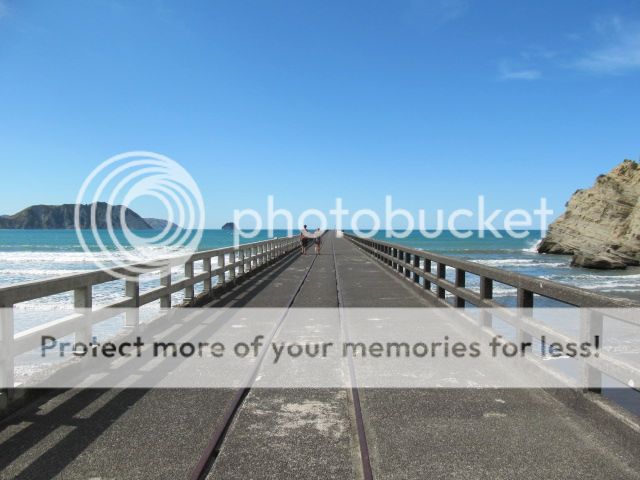
Tolaga Bay wharf, opened in 1929 and under restoration since 1999. 660 metres long.
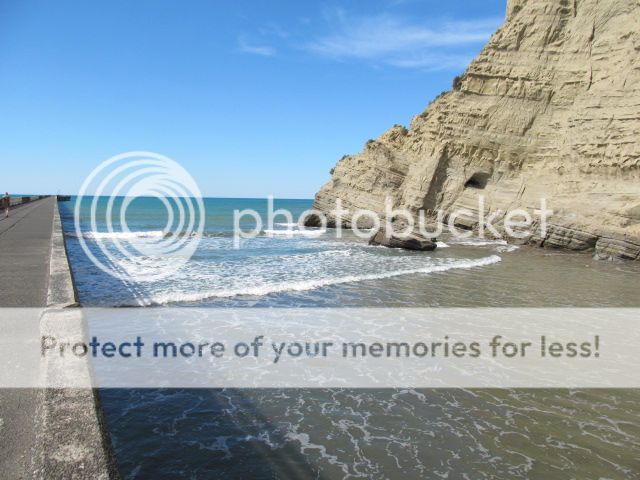
Sea and cliffs from part way along the wharf.
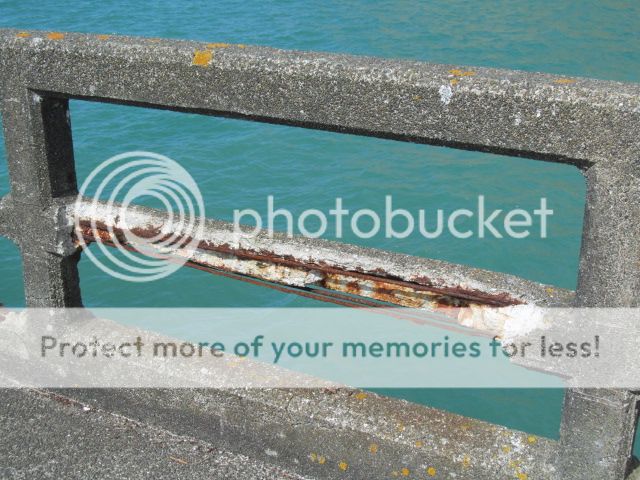
The sort of damage the restorers are trying to repair.
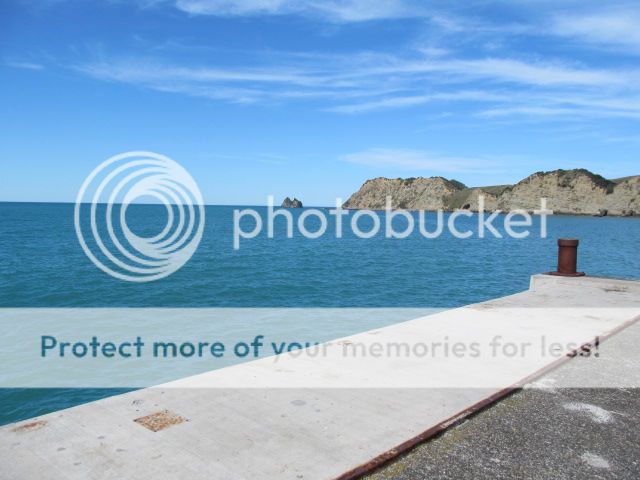
Looking south from the end of the wharf. The cliffs have probably not changed much since James Cook sailed these waters in October 1769. They can be very spectacular, especially in late afternoon.
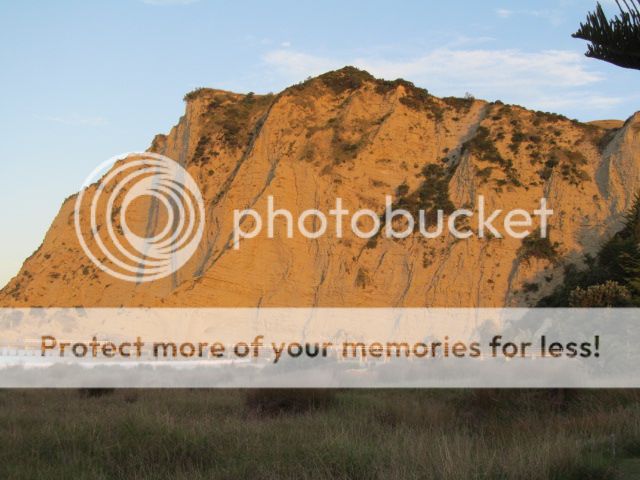
As you can see here, the cliff catching the late afternoon sun and glowing gold.
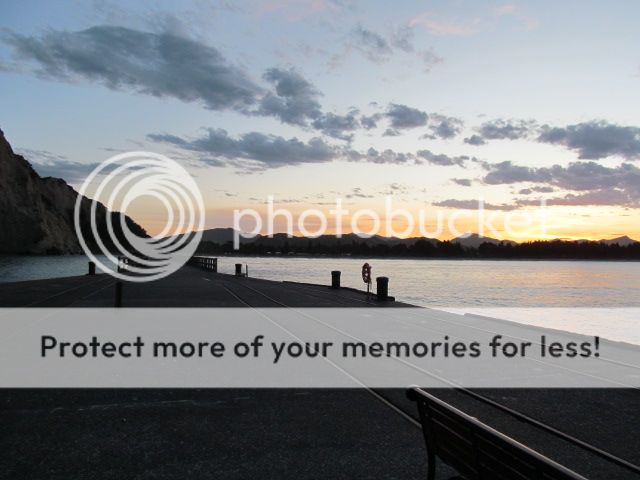
This view is from the end of the wharf just as the sun drops behind the hills to the west.
After a good sleep I woke to evidence of overnight rain. I packed and made my way into town for breakfast.
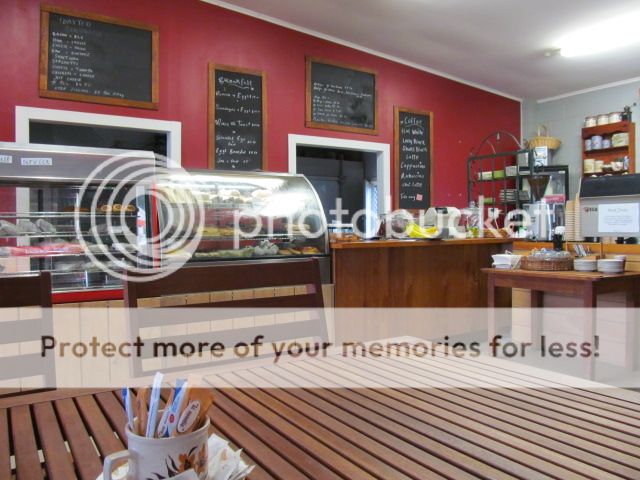
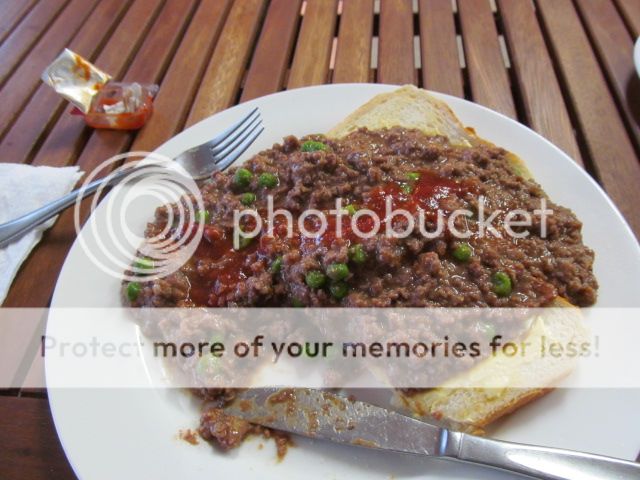
Mince on toast (Delicious) and a coffee (OK).
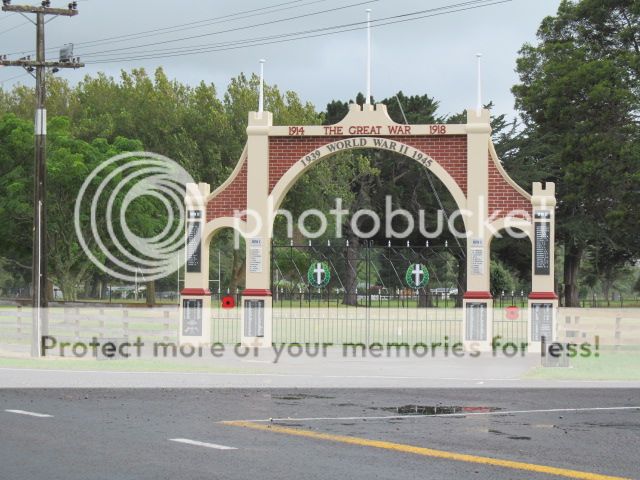
Most of our small towns have some sort of war memorial. Tolaga Bay was no exception.
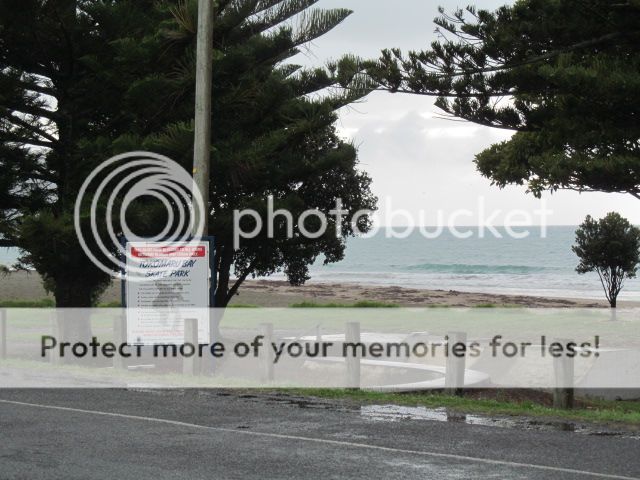
As I moved out into new territory the rain returned, necessitating a stop for wet gear to go on. It rained pretty much all the way around the Cape. 30-some kilometres further on I reached Tokomaru Bay, big enough for a Skate Park but not much else.
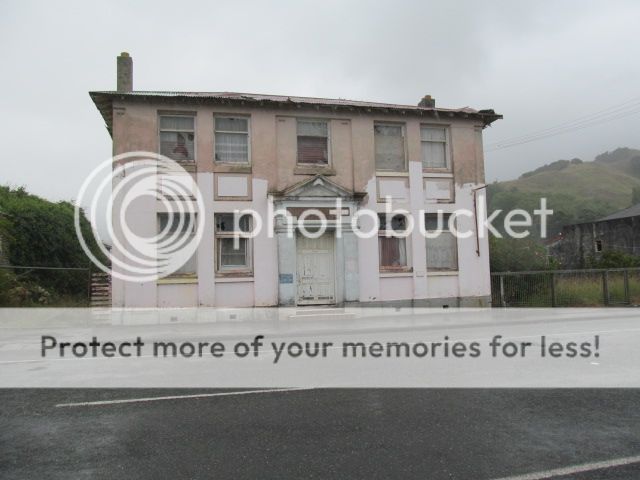
Immediately opposite the Skate Park was the Bank of New South Wales, Established 1817. Just to the left of the door is a small plaque, rather forlornly offering Cheque Accounts.
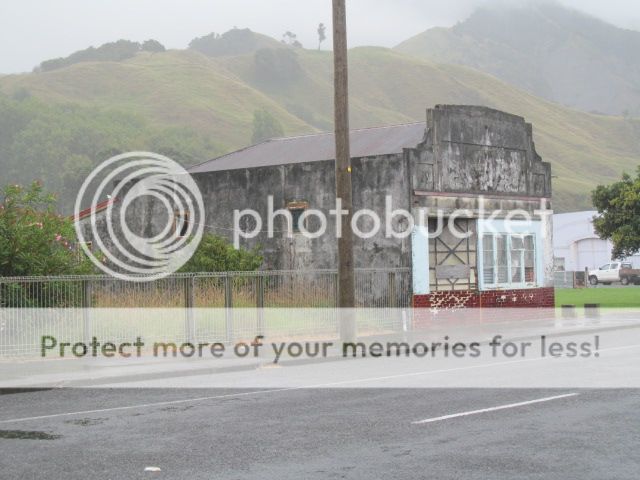
This stood close by, the lettering on the facade now too faded to give any hint as to what the building once was.
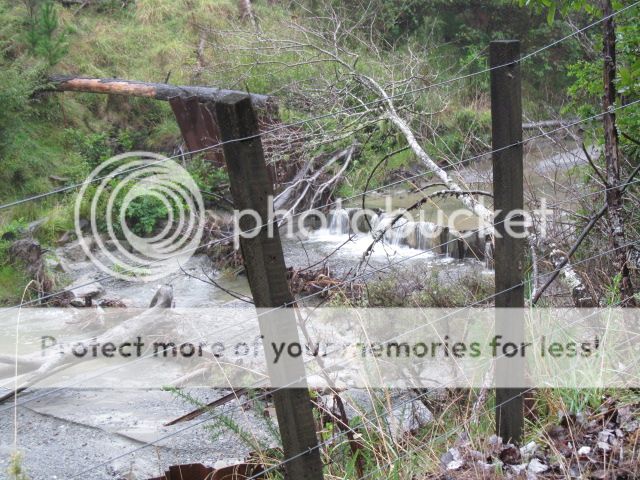
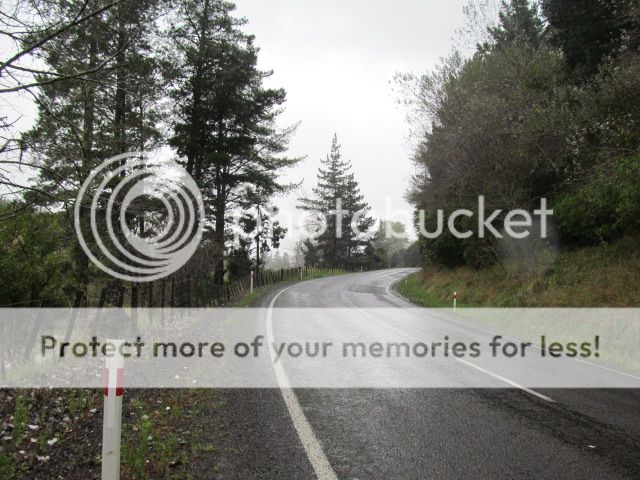
A little further up the road I stopped and took these two shots. One of the local Maori tribes describe themselves as "the children of the mist'. Looking at the second shot it is easy to understand why.
The countryside is wild and forboding. Steep hills, covered with rough scrub and trees abound. There are streams everywhere and the road twists and turns, rises and dives around, and in some cases over, the hills. Signs of habitation are few. I passed several abandoned houses, some obviously very old but some surprisingly modern ones as well.
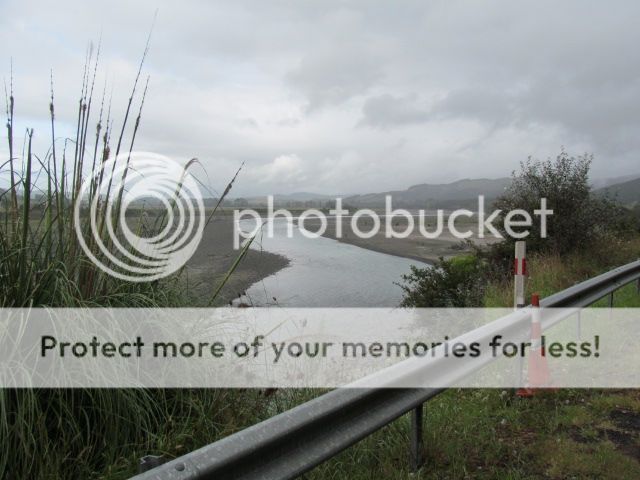
Still raining and a large river valley, north of Ruatoria, I think, followed by........
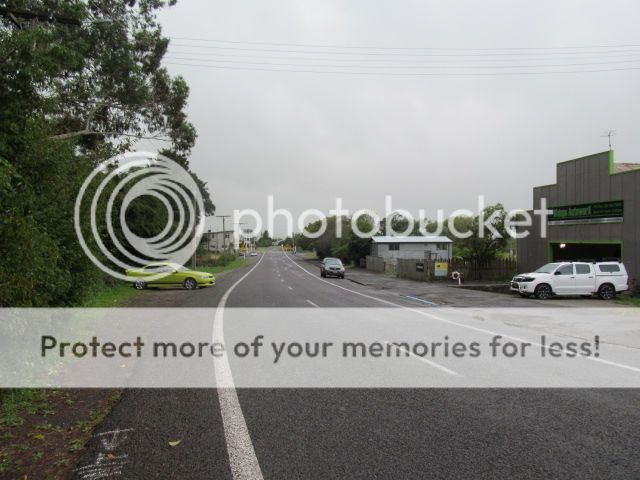
a settlement so small I missed the name.
The rain continued right around the cape and finally stopped just after Hick's Bay.
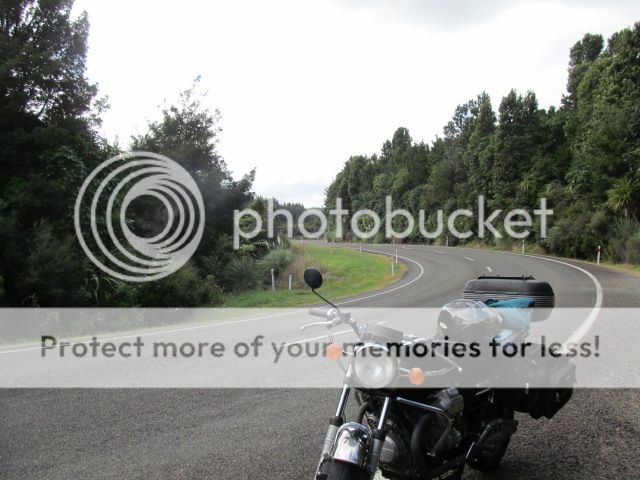
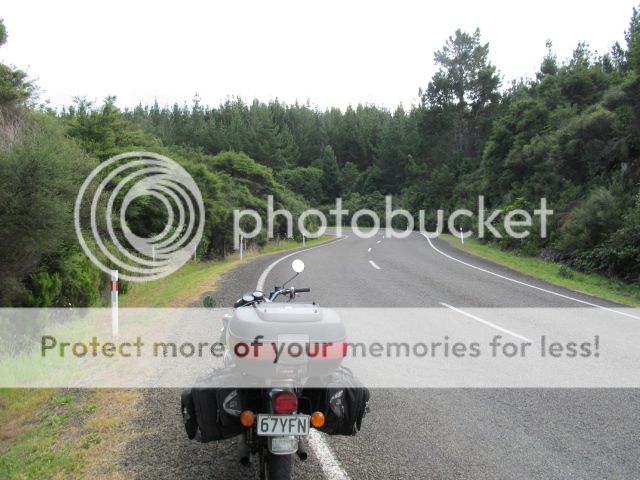
I stopped to remove wet gear, peed against a fence post and then motorcycle paradise appeared. The day became fine and hot and the road followed the coast for miles. Gorgeous views appeared all the time but, in the interests of not boring you completely....
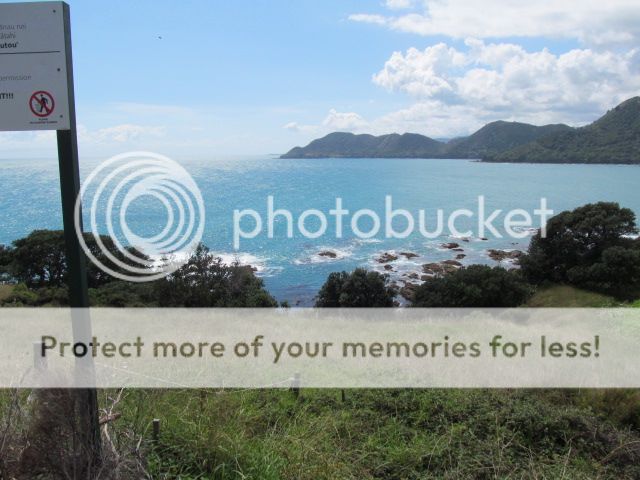
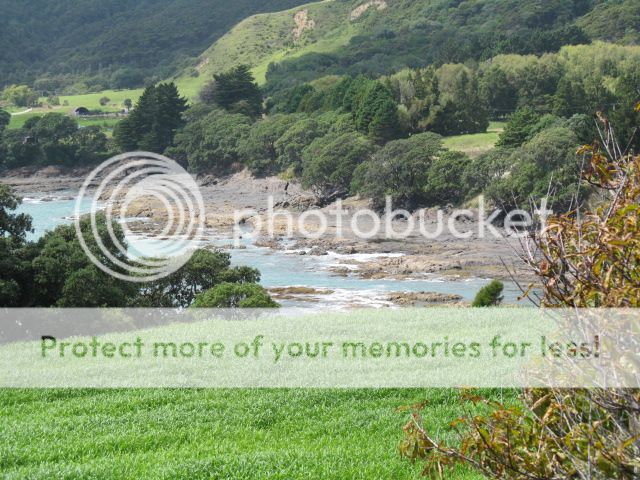
...I have only shown these.
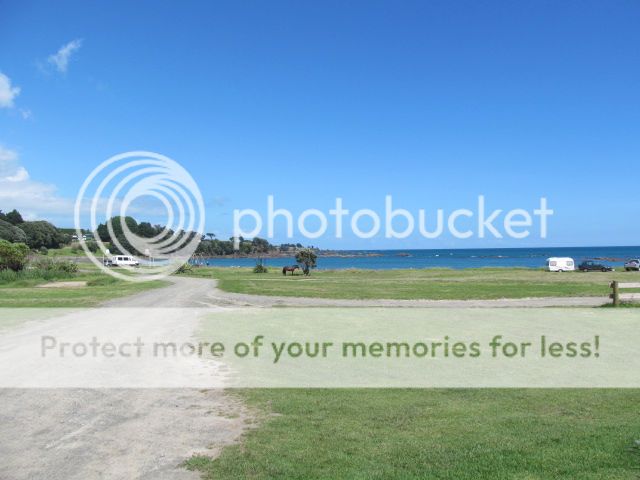
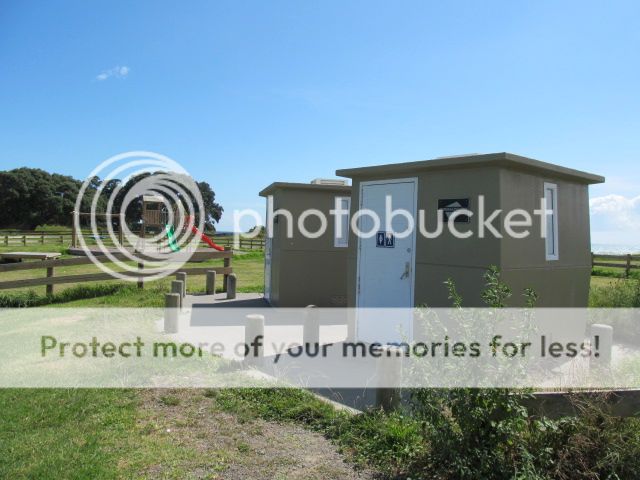
Oh and these 2 views of Te Kaha. The toilets were clean, pleasant smelling and well stocked. My compliments to whoever maintains them!
Onward, ever onward and just before 3pm I arrived in Whakatane, at my friend Graeme Care's place, where I found...
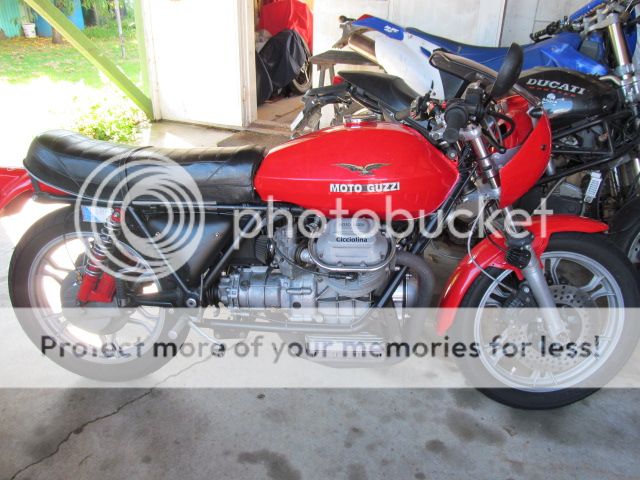
this!!! Graeme's bike is a 1980 G5 or Spada, imported from Australia and showing signs of having been raced there. Most filler and drain plugs have been drilled for lock wire and the brakes have been de-linked.

It also has had a repair to the back of the engine case where the gearbox bolts on, on the right hand side and the manifolds have been cut and re-welded to make them straighter. Does anybody recognise it?
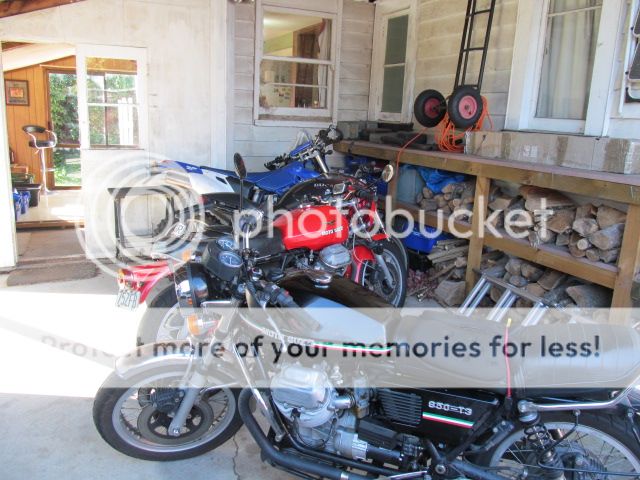
Two happy Guzzis settling in for the night.
Just around the corner from Graeme's place lives Jordan who has one of two (reportedly) T4s in the country.
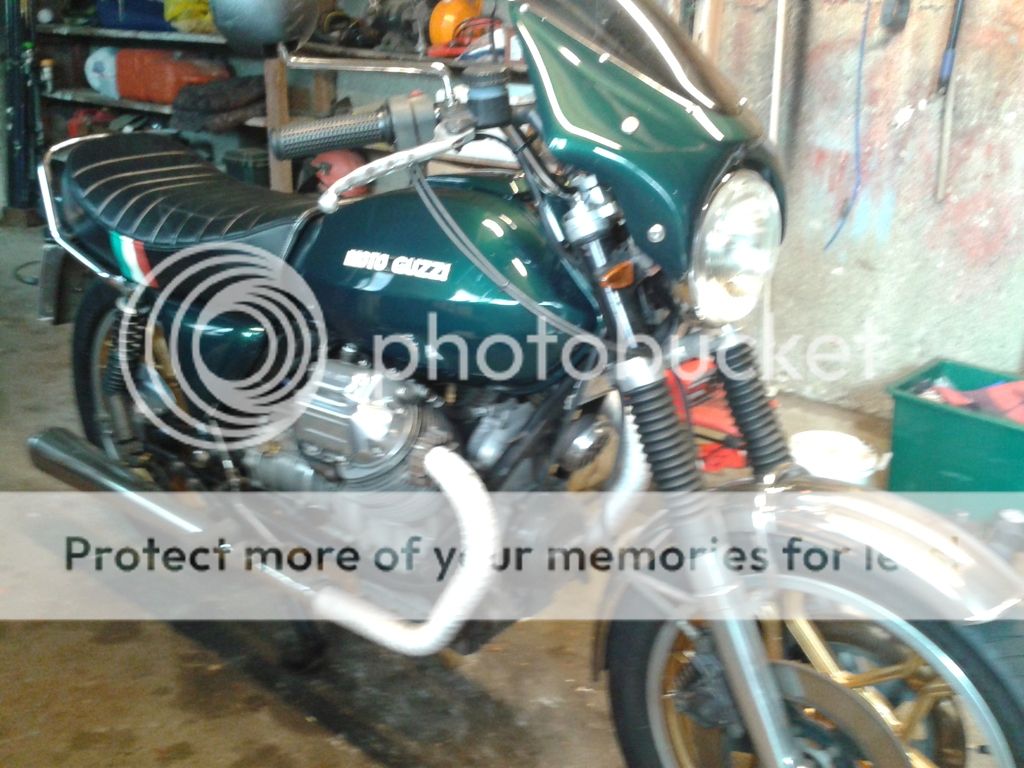
This picture was taken on my phone so lacks a bit in quality. The bike, however, does not. It was built in 1981 and must surely be one of the last round barrel models.
The next morning, after signing Graeme up to WildGuzzi, we spent some time making his bike run right. The carbs were well out of synch and it would not run without the enrichener on. It also died as soon as you tried to rev it. We synched the carb slides, set the idle and adjusted the mixture until it started and idled without enrichener and revved cleanly from idle. We then set off on a ride, meeting up with a friend of Graeme's (Barry) on a Paris-Dakar BMW (we made him ride at the back except when he was showing us the way) and headed back to Opotiki. I got to try out Graeme's bike. It was a very nice ride and went very well. I suspect the flywheel may have been lightened as it seemed to rev much quicker than my standard T3 and had the usual Tonti sure-footedness. Graeme was pleased to hand back my well-loaded T3.
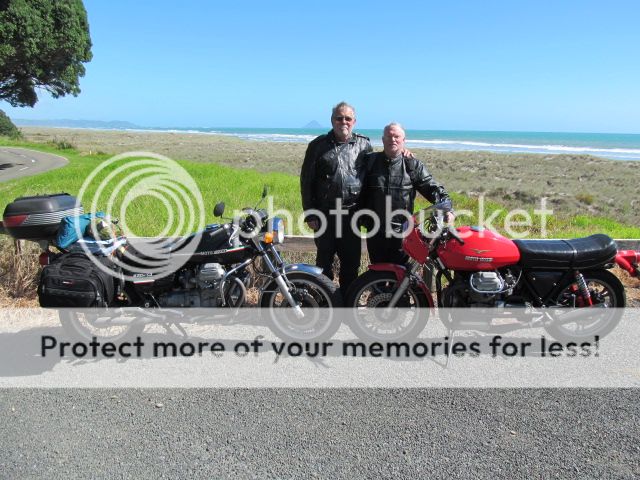
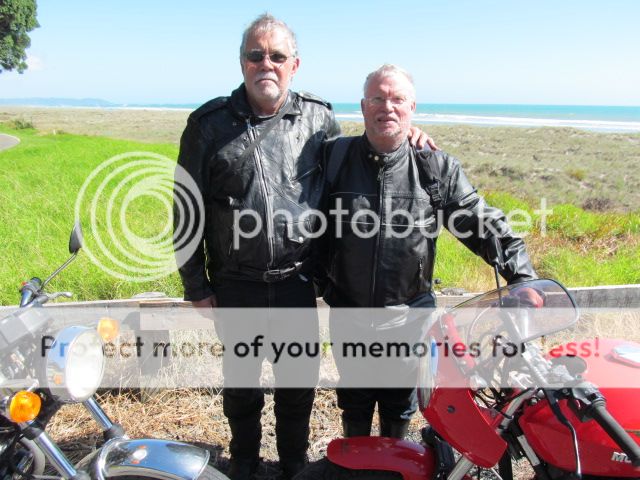
We stopped for a photo and here are two grey-bearded old farts, happy to see each other again after too many years.
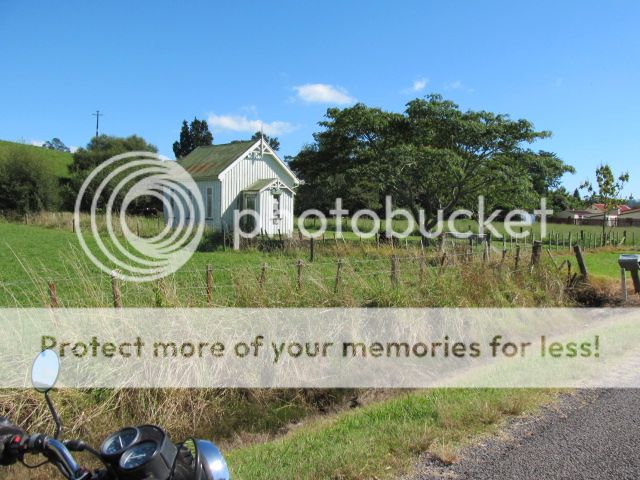
Moving on and I had to stop for this shot. The old church still looks in good repair, possibly because of the caretaker, a large bull, just visible to the left of the tree trunk, who likely discourages vandals.
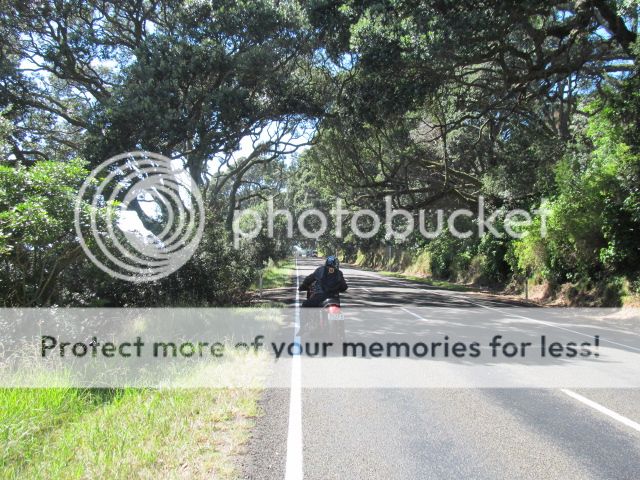
Just south of the last stop we came to this, where the native Pohutukawa trees, which only grow close to the coast and only in the North Island, meet over the road. Note the photobomber on the red Guzzi.
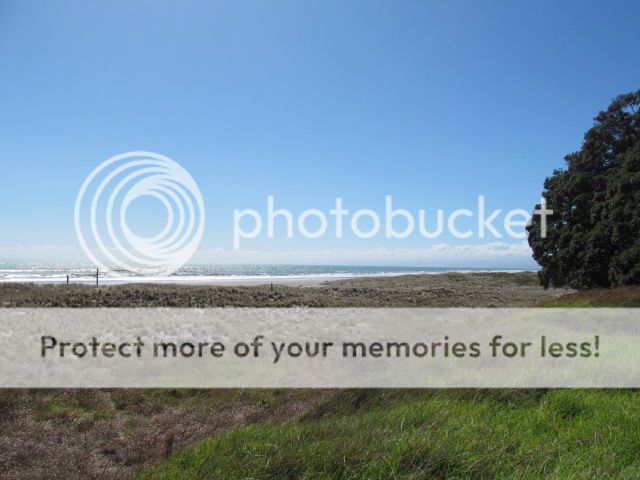
This was my last view of the coast before we headed inland to Opotiki. There I said goodbye to Graeme and Barry and headed through the Waioeka Gorge back to Gisborne.
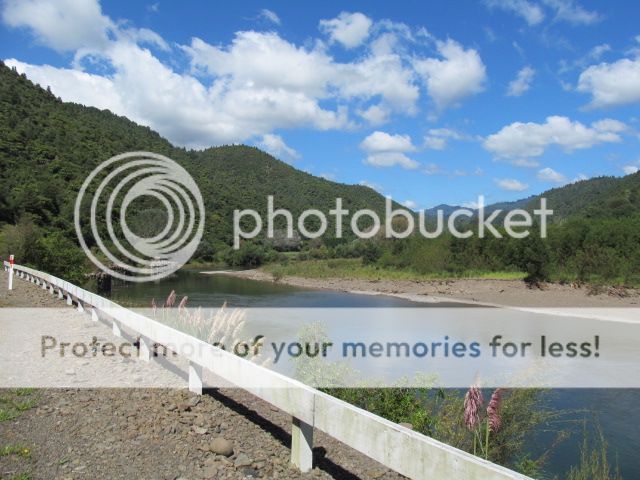
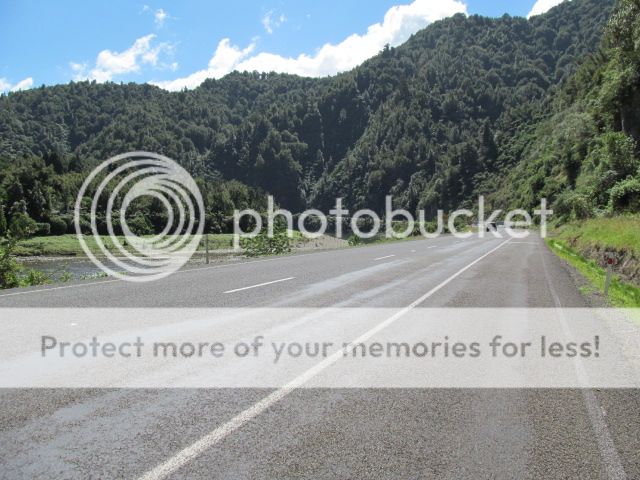
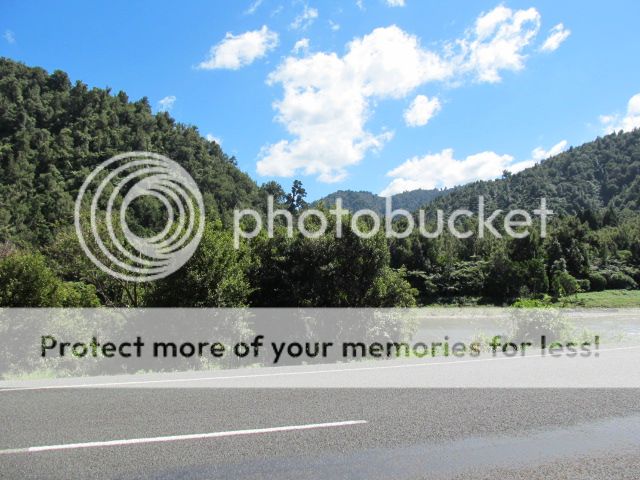
These three views are typical of the road, 55km of twists and turns with advisory speed signs as low as 45kmh. The road was mainly dry although there were wet patches in the shadows and, after all the twists, became a beautiful, sweeping road where the speed limit (100kmh) was easily maintained (or broken). I turned south at the southern end of Gisborne and headed on another while until I reached my overnight stop at the Morere Hot Springs Lodge.
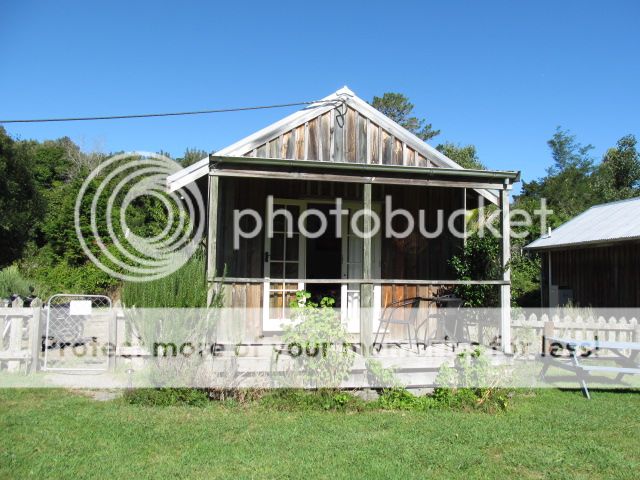
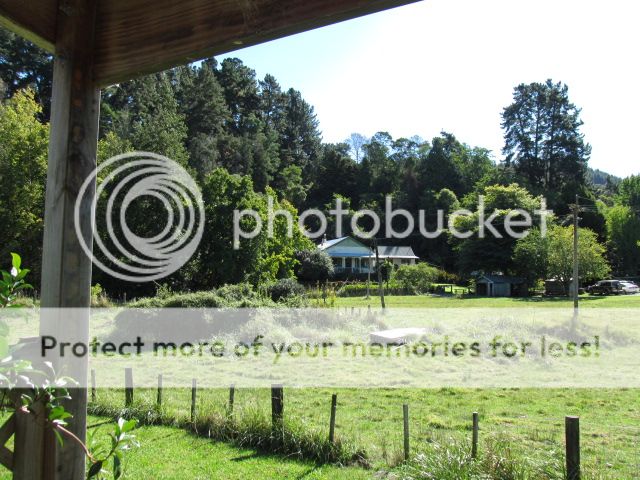
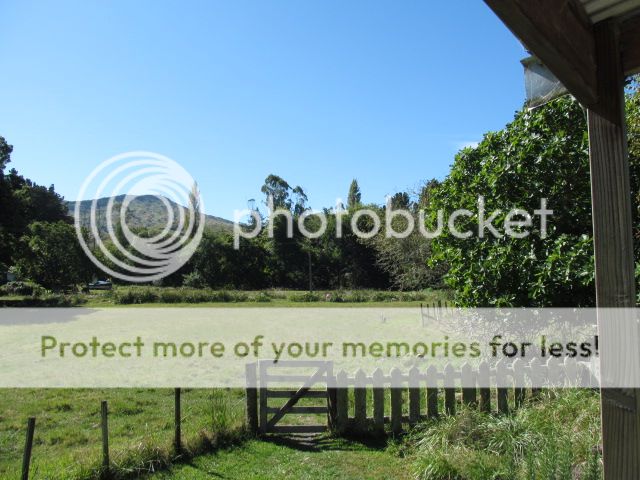
The view of my cabin and the 2 pictures taken from the porch give a good idea of the surroundings. I went across the road (about 5 mins walk) for a hot swim. The place was fantastic and I strongly recommend it if you are in the area.
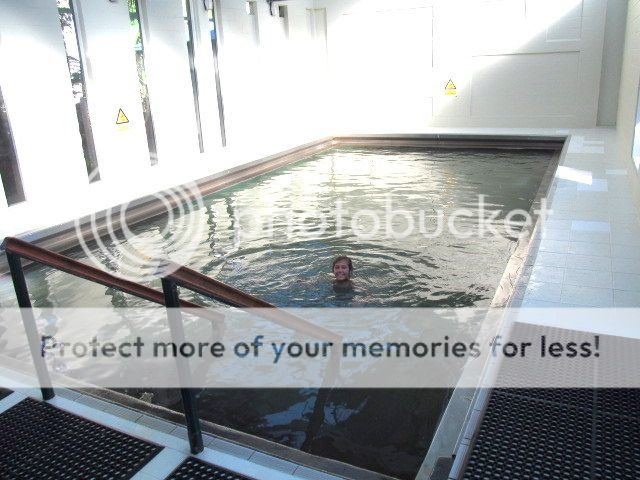
In the hot pool I met Maia,
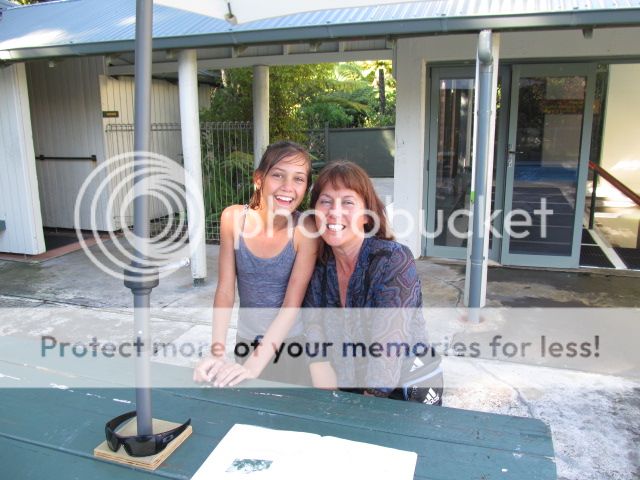
shown here with her mother, Angela. It turned out Angela and I had met before in the early 1990's when she taught at a school in Napier which I visited as part of my Traffic Education duties. We had a great time in both the hot and cold pools, well Maia and I did anyway as Angela would not swim because she dislikes cold water, and I helped Maia perfect her breathing while swimming. By the time we left the pools, Maia had swum 100 metres, hardly stopping all the way.
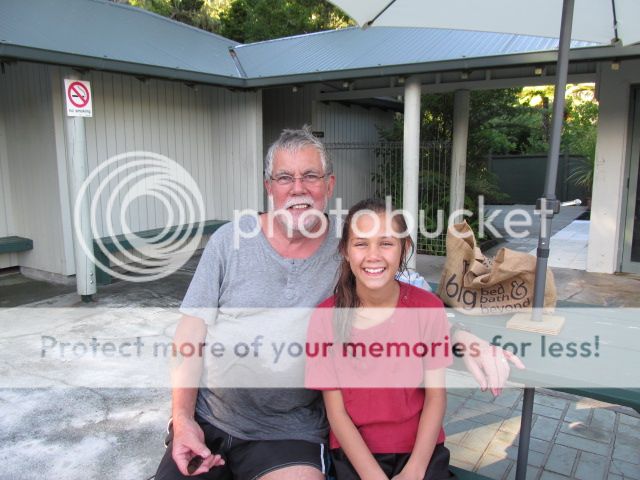
We all parted as great friends and I have such an awesome memory.
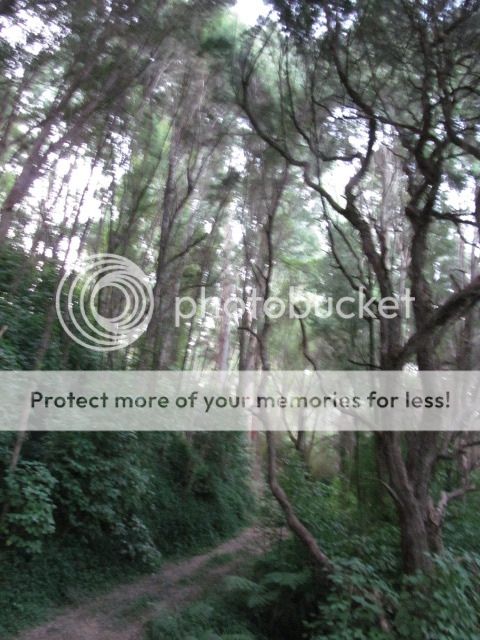
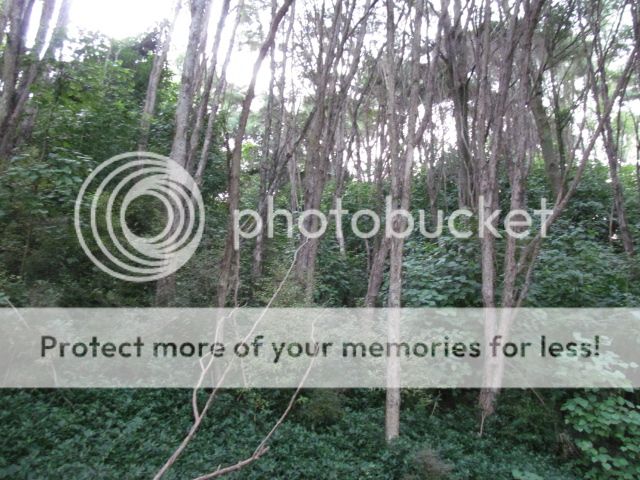
Later I went for a walk into the bush close to my cabin.
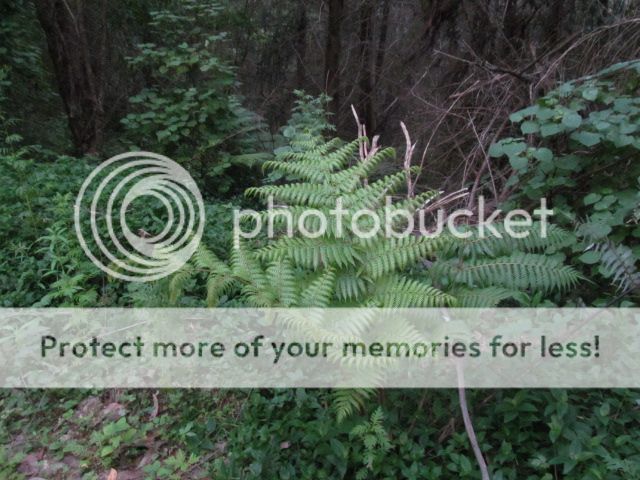
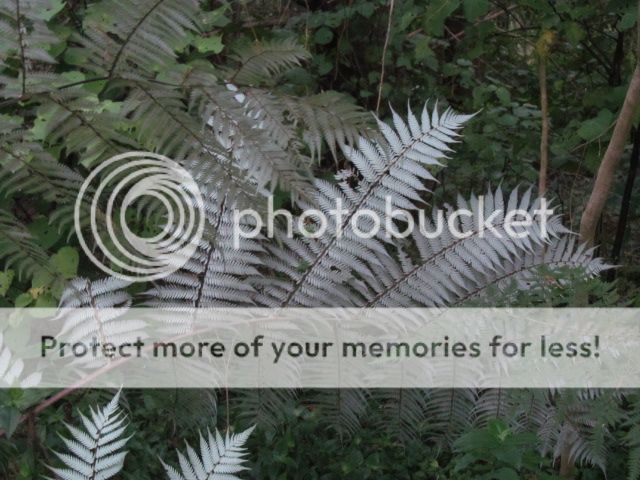
There I found some examples of New Zealand's silver fern, an emblem worn by most of our international sporting teams. The fern is green until you look underneath, when the reason for it's name becomes apparent.
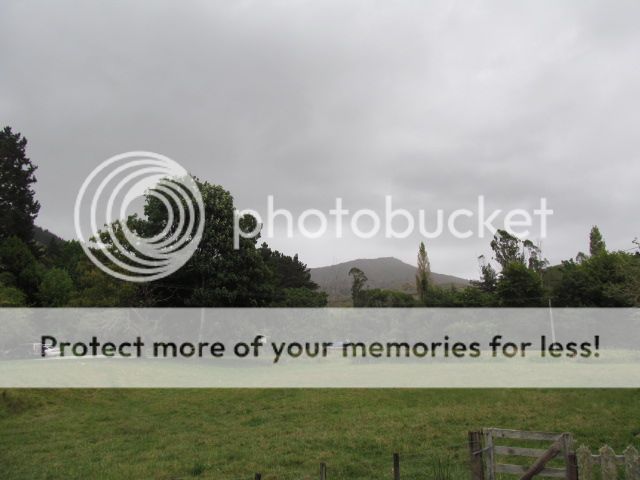
This morning I woke to more rain and, having packed, was on the road at 9.30, arriving home about 1145. I covered 1168km over three and a half days of riding got a very sore rear end from time to time, despite a gel cushion and had a blast. I hope you will enjoy my pictures as much as I enjoyed my trip.